Best Dog Food for Pugs With Skin Allergies: What to Look For
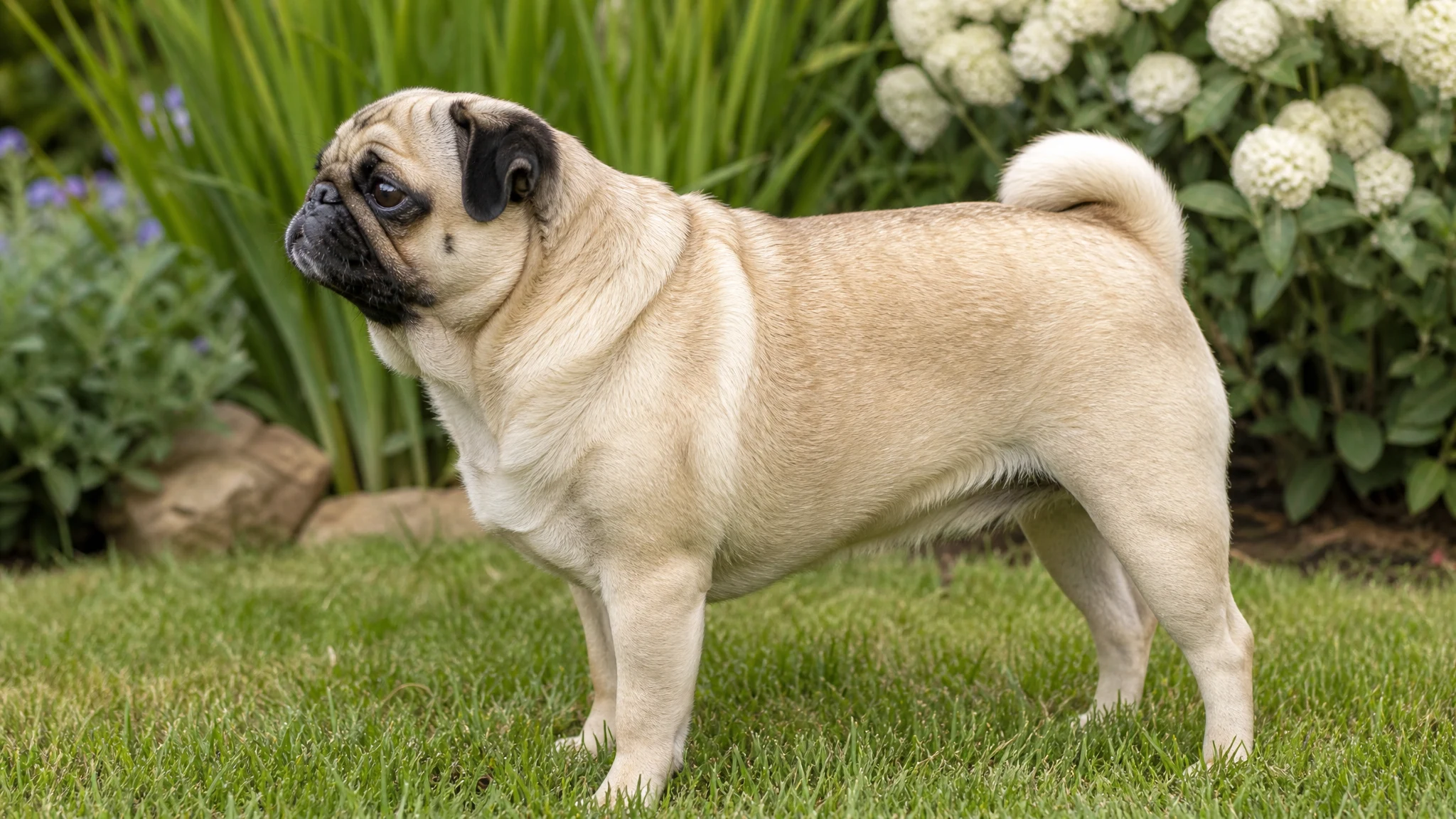
General nutrition information compiled from product labels and published sources, not veterinary advice. Your veterinarian is the right person to choose a diet for your dog, especially one with a health condition.
Itchy, red or smelly skin is stressful to watch in a Pug. Food is often the first thing owners blame. It is also the thing they can change most easily.
Here is the honest starting point. No food can be named the best dog food for pugs with skin allergies without a diagnosis. Skin trouble has many causes, and a veterinarian has to sort them out for your individual dog. What you can do is learn to read labels, compare foods calmly, and run a clean food change with your vet's guidance.
This guide walks through that process in steps.
How We Compared Foods
We compared label data published by the brands: the AAFCO statement, the first five ingredients, guaranteed analysis and calories. We did not run feeding trials or taste tests, and we did not feed any of these foods to dogs. Nothing here says a food will help or fix a skin problem.
What You Need Before You Start
- Your Pug's current food bag or can, with the full ingredient list and AAFCO statement.
- A list of every treat, chew, chewable medication, table scrap and flavored supplement your dog gets.
- A notebook or phone notes to log itching, ear trouble, stool and appetite.
- Photos of any skin areas, taken every few days in the same light.
- Your dog's current weight. Pugs typically weigh about 14 to 18 pounds, according to the Orvis Pug breed page.
- An appointment with your veterinarian.
Step 1: Get the Skin Problem Looked At First
Itching in dogs can come from food, but also from fleas, environmental triggers, infections and other causes. A food change will not sort these out by itself, and some of them need direct treatment.
Book a visit before you buy anything new. Bring your notes and photos. Ask whether a food trial makes sense for your dog and how long it should last. If a diet trial is advised, ask which diet your veterinarian recommends. Prescription and hydrolyzed diets are something only a veterinarian prescribes.
Step 2: Write Down Exactly What Your Pug Eats Now
List the main food, then every extra. Many owners forget flavored dental chews, pill pockets and the bit of cheese used for training. If your vet suggests a food trial, these extras can undo it.
Copy the first five ingredients from the label, since they make up most of the recipe by weight. Note the protein sources by name. This record helps your vet see what your dog has already been eating.
Step 3: Learn to Read the Label
Four parts of a label do most of the work.
The AAFCO statement
Look for a line saying the food is formulated to meet, or has been shown by feeding tests to meet, the AAFCO Dog Food Nutrient Profiles for your dog's life stage. Without it, the food may not be complete and balanced.
The ingredient list
Ingredients are listed by weight. Names matter. "Chicken" and "chicken by-product meal" are different lines on a label. If your vet is trying to narrow down a trigger, they will want the exact wording, not the marketing on the front of the bag.
The guaranteed analysis
This gives minimum protein and fat and maximum fiber. Some brands only publish averages on a dry matter basis, which is not the same measure. Do not compare the two types of numbers side by side as if they match.
Calories per cup
Pugs are listed among the breed's common health issues for obesity, per the Orvis Pug breed page. Calories matter for any food you choose.
Step 4: Compare a Few Candidates Side by Side
The table below uses label data from each brand's own page. It is a comparison tool, not a ranking and not a recommendation for skin problems.
| Food | First ingredients listed | Calories |
|---|---|---|
| Royal Canin Pug Adult (dry) | Brewers rice, brown rice, oat groats, chicken by-product meal, corn | 315 kcal ME per cup |
| Hill's Science Diet Adult Perfect Weight Small & Mini Chicken & Brown Rice (dry) | Chicken, cracked pearled barley, brown rice, pea fiber, corn protein meal | 298 kcal per cup |
| VICTOR Hi-Pro Plus Small Breed Adult (dry) | Beef, chicken meal, beef meal, brown rice, whole grain millet | 360 kcal per cup |
| Freshpet Small Dog Bite Size Chicken Recipe (fresh) | Chicken, chicken liver, carrots, cranberries, eggs | 267 kcal per cup |
Two things stand out. First, every food above contains chicken, beef or both among its first five ingredients. If a vet suspects a particular protein, none of these may fit, and the choice belongs to your vet. Second, calories per cup vary a lot, so the same scoop of different foods is not the same meal.
Royal Canin lists its Pug formula as shaped for the breed's short, square muzzle, but the brand gives no kibble dimensions. Check with the brand if kibble size matters to you.
For a wider look at the diet factors in this breed, see our guide to Pug nutrition and the diet factors that matter.
Step 5: Choose One Change and Make It Slowly
If your vet clears a new food, change only that one thing. Do not switch food, treats and supplements in the same week. If you change several things at once, you cannot tell which one made a difference.
Move over gradually, mixing more of the new food with the old, unless your vet gives different instructions. Use the feeding guide on the brand's page as a starting point only. For example, Royal Canin's page lists 1 1/8 cups (92 g) per day for a 13 lb, low-activity dog on its Pug Adult food. Your dog's needs may differ, so adjust with your vet's advice.
Step 6: Keep Weight in Check
Extra weight is a common concern in Pugs. A June 2026 Texas A&M College of Veterinary Medicine press release describes a clinical trial in short-muzzled dogs, including a Pug, where dogs reaching ideal weight showed improvements in breathing. The trial was still ongoing, so treat it as early information, not a promise.
Weigh your dog regularly and feel for ribs under a light layer of padding. If a food is more calorie-dense, you may need a smaller portion.
Step 7: Track What You See
Write down itching, redness, ear problems, paw licking and stool each week. Add dated photos. Bring them to follow-up visits. Good notes help your vet judge whether a change is worth keeping.
Tips That Help
- Keep the old food bag until the trial is over, so you can show exact ingredients.
- Ask family members to hold back on treats and table scraps.
- Check the brand's own product page for the current label, since recipes can change.
- Ask your vet before adding any supplement or topping.
- Be patient. Skin changes usually take time, and your vet can tell you how long to wait.
Common Mistakes to Avoid
- Assuming grain is the culprit. Many foods with grains and many without them exist, and a food being "grain-free" does not make it a skin food. The FDA also continues to list its investigation into possible links between certain diets and canine dilated cardiomyopathy (DCM). Its last page update was December 23, 2022, and it said it would not post more updates without meaningful new science. Ask your vet about this before choosing a diet.
- Switching foods every few weeks. It makes results impossible to read.
- Trusting front-of-bag claims. Read the ingredient list and AAFCO statement instead.
- Ignoring calories. A "better" food that adds pounds is not helping a Pug.
- Skipping the vet. Itchy skin that is left alone can worsen, and a vet can rule out other causes.
What Results to Expect
If food is part of your dog's skin problem, a vet-guided diet change may be associated with less itching over time. That is not certain. Some dogs improve, some do not, and other causes may be involved. Your veterinarian is the right person to judge whether the diet is making a difference.
If your Pug is no better after the period your vet set, go back and talk through the next step instead of trying another food on your own.
Sources
- Orvis Pug breed page
- Texas A&M College of Veterinary Medicine press release, June 16, 2026
- FDA CVM: Investigation into Potential Link between Certain Diets and Canine Dilated Cardiomyopathy
- Royal Canin Pug Adult Dry Dog Food
- Hill's Science Diet Adult Perfect Weight Small & Mini
- VICTOR Hi-Pro Plus Small Breed Adult
- Freshpet Small Dog Bite Size Chicken Recipe