How Diet Supports Overall Pug Health: A Practical Guide
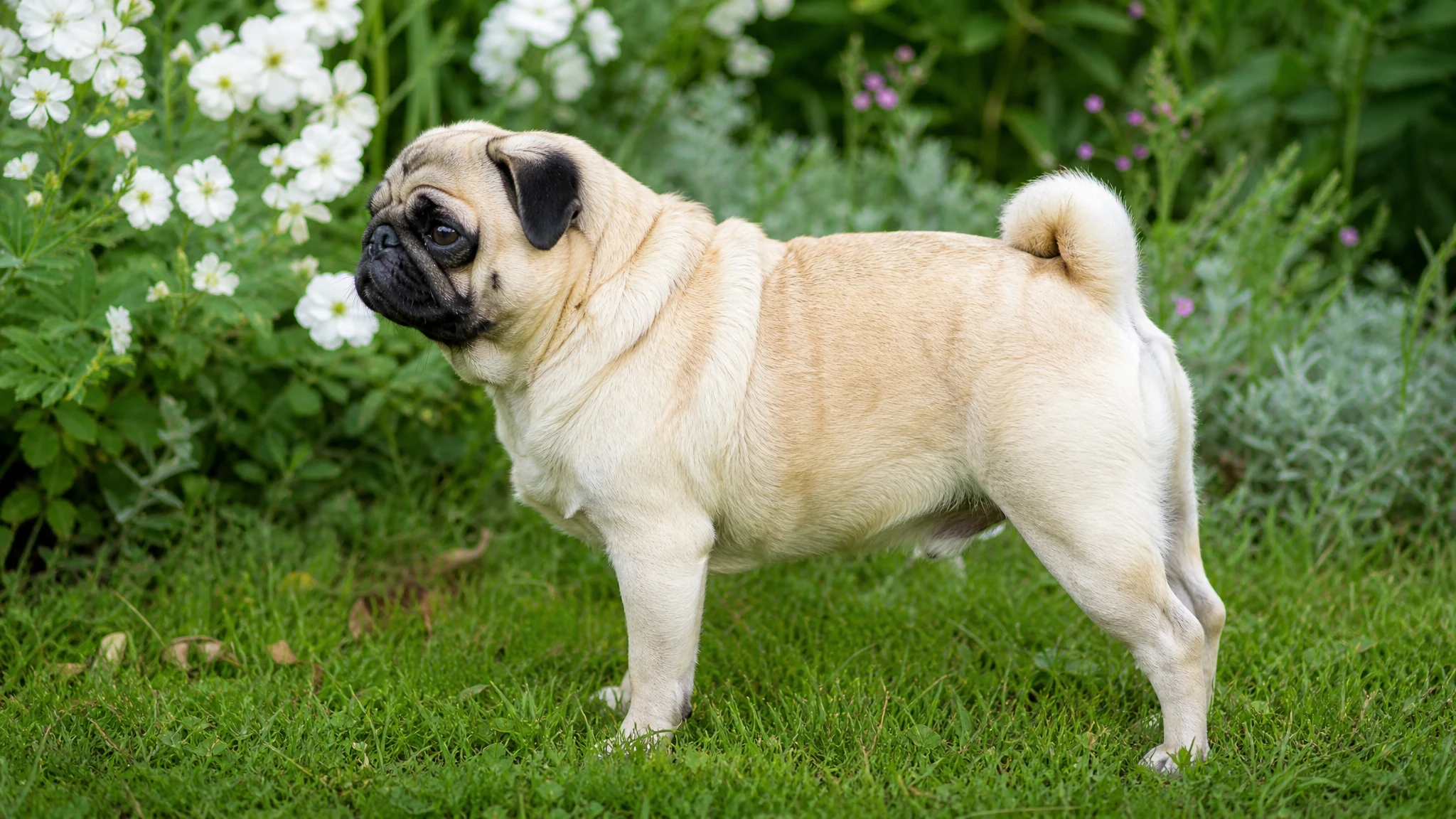
General nutrition information compiled from product labels and published sources, not veterinary advice. Your veterinarian is the right person to choose a diet for your dog, especially one with a health condition.
Food will not fix every problem a Pug has. It does shape a few things you can control, and body weight is the biggest one. This guide walks through a simple routine for using diet to support pug health, one step at a time.
It is written for owners who read labels and distrust big claims. Nothing here says a food prevents or treats a condition. Your veterinarian decides what is right for your individual dog.
Why diet matters for this breed
The Orvis Pug breed page lists obesity among the common health issues for Pugs. It gives a typical adult weight of about 14 to 18 pounds and a life expectancy of 13 to 15 years. Those are averages, so your dog may fall outside them.
Pugs are also short-muzzled. Texas A&M College of Veterinary Medicine announced a clinical trial on June 16, 2026, in short-muzzled dogs, including a Pug. It looks at whether reaching an ideal weight eases breathing. The dogs that reached ideal weight showed improvements, but the trial is ongoing. Treat that as an early signal, not a promise. Weight loss is not a cure for airway problems.
For a wider look at the factors involved, see the diet factors that matter for this breed.
What you will need
- The bag, can or tray your dog eats now, or its full label photographed.
- A kitchen scale (grams) or a standard measuring cup.
- A notebook or phone note for weights, portions and treats.
- A list of everything else your dog eats: treats, chews, table scraps, food used for pills.
- Your veterinarian's contact details, for weigh-ins and questions.
Step-by-step: building a diet routine for your Pug
Step 1: Get a starting weight and body check
Ask your veterinarian to weigh your Pug and score their body condition. Ask what a healthy target weight is for your dog. Do not rely on the breed average alone, because a Pug's frame can differ from the typical range.
Write the number down with the date. This is your baseline.
Step 2: Read the label for the AAFCO statement
Find the sentence that says the food is complete and balanced and for which life stage. It will say the food meets the AAFCO Dog Food Nutrient Profiles, or that AAFCO-procedure feeding tests substantiate it. The two wordings are different methods, and both are accepted ways to support a complete-and-balanced claim.
Match the life stage to your dog. Royal Canin's Pug Puppy formula is for purebred Pugs from 8 weeks to 10 months. Its Pug Adult formula is for 10 months and older.
You will see "all life stages" on some foods. VICTOR Hi-Pro Plus Small Breed Adult and Freshpet Small Dog Bite Size Chicken Recipe both carry that statement. They are written for dogs of all ages, so the portion matters more than the stage.
A large-breed growth formula is not a topic for Pugs. At a typical 14 to 18 pounds, a Pug is not a large-size dog.
Step 3: Look at calories per cup, not just protein
Calorie density varies a lot between foods, and Pugs have little room for error. Here are label figures for several foods:
| Food (brand page figures) | Calories |
|---|---|
| Royal Canin Pug Adult (dry) | 315 kcal ME per cup |
| Hill's Science Diet Adult Perfect Weight Small & Mini (dry) | 298 kcal per cup |
| Hill's Science Diet Adult 11+ Small & Mini (dry) | 378 kcal per cup |
| VICTOR Hi-Pro Plus Small Breed Adult (dry) | 360 kcal per cup |
| Freshpet Small Dog Bite Size Chicken Recipe (fresh) | 267 kcal per cup |
Swapping one cup of a lower-calorie food for one cup of a denser one quietly raises daily calories. Keep this in mind whenever you change foods. A wet or fresh food may list calories per can or per pack instead, so compare on the same basis.
We compared label data only. We did not run feeding trials or taste tests, so none of this says how any food performs for an individual dog.
Step 4: Read the ingredient list with a skeptical eye
Ingredients are listed by weight, so the first five tell you the most. Royal Canin Pug Adult lists brewers rice, brown rice, oat groats, chicken by-product meal and corn first. Hill's Perfect Weight lists chicken, cracked pearled barley, brown rice, pea fiber and corn protein meal. Freshpet's Small Dog recipe starts with chicken, chicken liver, carrots, cranberries and eggs, and it is listed as grain-free.
None of these lists tells you a food is better or worse for your dog. Marketing words such as "premium" or "natural" do not have a nutrition meaning you can check. Use the ingredient list to spot things your dog reacts badly to, and to compare like with like.
On the DCM question, the FDA's investigation page was last updated December 23, 2022. The agency said it would not release further public updates until there is meaningful new scientific information. It does not give owners a reason to panic, and it does not give a rule for choosing a food. If you are worried about your dog's diet and heart health, ask your veterinarian.
Step 5: Start from the label feeding guide, then adjust
Treat the feeding chart as a starting point. For example, Royal Canin's page lists 1 1/8 cups (92 g) a day for a 13 lb, low-activity adult on its Pug Adult formula. VICTOR's small breed adult chart is based on an 8 oz measuring cup and says to adjust to maintain good body condition after age one. Hill's pages tell owners to adjust amounts to maintain optimal weight and to ask a veterinarian if unsure.
Weigh the food rather than scooping it if you can. A "cup" can vary by several grams from one scoop to the next.
Step 6: Count treats and extras
Add up every treat, chew and scrap. Pugs are famously food-motivated, and small extras add up fast on a small body. Use a portion of the daily kibble as training rewards where you can.
Do not add supplements to "boost" a complete diet without asking your veterinarian first. This guide does not give supplement doses.
Step 7: Transition foods slowly
If you change foods, mix the new into the old over about a week or longer, shifting the ratio gradually. Watch stools and appetite. Stop and call your veterinarian if there is vomiting or ongoing diarrhea. Do not switch foods on the same day you start something else new, such as a new medication.
Step 8: Re-weigh and keep a log
Weigh your Pug every few weeks at first, at home if you can or at a clinic. Write down the date, weight, daily portion and any changes. A trend over weeks tells you far more than a single reading.
If weight is climbing or falling, change the portion in small steps and tell your veterinarian. A weight-management plan for a Pug should be set by your veterinarian, not guessed at.
Tips for staying consistent
- Feed measured meals at set times rather than leaving food out all day.
- Keep one household rule for treats so everyone feeds the same way.
- Photograph the label of any new food so you can recheck the AAFCO statement later.
- Re-check the life stage when your dog ages. Hill's Adult 11+ Small & Mini, for instance, is written for older small breeds, and Royal Canin's Mature 8+ canned food is for small breed dogs over 8 years. Whether your Pug needs a senior formula is a question for your veterinarian.
- Use a food puzzle or slow feeder if your Pug eats very fast. Ask your veterinarian first if your dog has had breathing trouble at mealtimes.
Common mistakes to avoid
- Feeding by the eye. A scoop is not a measurement.
- Ignoring calories when switching foods. Cup for cup is not calorie for calorie.
- Trusting the front of the bag. Check the AAFCO statement and the ingredient list.
- Using a breed-named food as proof. A Pug-specific formula, such as Royal Canin's, is described by its label data. It is not a promise about any health outcome.
- Crash dieting. Rapid weight loss is not a safe approach. Work with your veterinarian on a plan.
- Blaming food for conditions the breed page says are not diet-managed. Legg-Perthes disease, patellar luxation and Pug Dog Encephalitis are listed as Pug concerns by Orvis, and diet is not presented as the way to manage them. Hip dysplasia and an elongated palate are listed too, but food should not be treated as a fix for them either.
What results to expect
A steady routine may help your Pug stay at a healthier weight. A healthy weight may make daily life more comfortable, and the early Texas A&M findings suggest it could ease breathing in some short-muzzled dogs. Results vary from dog to dog, and no food or portion plan can promise a specific outcome.
Expect gradual change. You may notice a steadier weight trend over several weeks, and a clearer picture of what your dog really eats. If something does not improve, or your dog seems unwell, go back to your veterinarian rather than changing foods again.
When to ask for help
Call your veterinarian if your Pug is gaining or losing weight without an obvious reason. Call them too if appetite drops, if breathing is noisy or labored, or if you want to change to a different type of diet, such as fresh or home-prepared food. Ask the brand directly for details that are not on its page. Kibble size, for example, is not stated for most of the foods covered here.
Sources
- Orvis Pug breed page
- Texas A&M College of Veterinary Medicine press release, June 16, 2026
- FDA CVM: Investigation into Potential Link between Certain Diets and Canine Dilated Cardiomyopathy
- Royal Canin Pug Adult product page
- Hill's Science Diet Adult Perfect Weight Small & Mini product page
- VICTOR Hi-Pro Plus Small Breed Adult product page
- Freshpet Small Dog Bite Size Chicken Recipe product page