Human Foods Pugs Should Never Eat
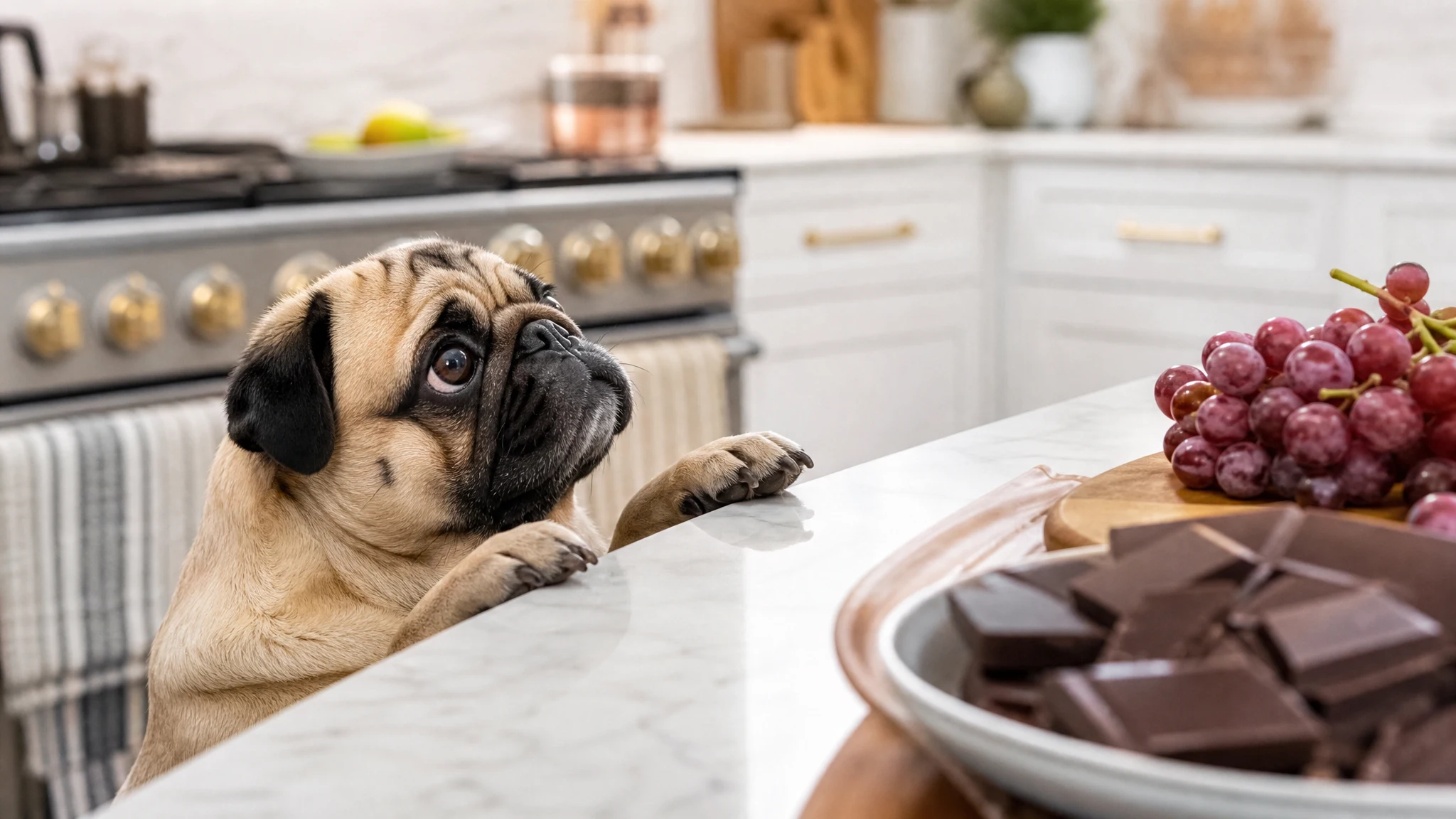
General nutrition information compiled from product labels and published sources, not veterinary advice. Your veterinarian is the right person to choose a diet for your dog, especially one with a health condition.
Pugs are small, food-motivated dogs, and a single dropped item can matter more for a dog that typically weighs 14 to 18 pounds, according to the Orvis Pug breed page. This page answers the questions owners ask most about what can Pugs not eat, grouped by theme. The toxic items come from the ASPCA Animal Poison Control list of foods that are dangerous to dogs.
None of this replaces your veterinarian, who decides what is right for an individual dog.
The Basics
What human foods can't dogs eat?
The ASPCA Animal Poison Control list names chocolate, grapes and raisins, xylitol, onions and garlic, macadamia nuts, and alcohol, among others. These are the usual starting points for any dog. Pugs are not an exception, and their small size leaves less room for error.
Why does it matter more for a small breed like a Pug?
A small body has less capacity to handle a harmful food. The Orvis Pug breed page gives an average adult weight of 14 to 18 pounds. A bite that seems tiny to you can be a larger share of a Pug's body.
Is a food safe just because it is natural?
No. Grapes, onions and macadamia nuts are all natural and all on the ASPCA list. Marketing words like "natural" or "whole food" say nothing about whether something is safe for a dog.
Sweets, Drinks and Sugar-Free Products
Can Pugs eat chocolate?
No. The ASPCA lists chocolate as toxic to dogs, and darker and baking chocolates are generally considered the more concerning kinds. Keep all of it out of reach, including cocoa powder and desserts that contain it.
What is xylitol, and where is it found?
Xylitol is a sugar substitute that the ASPCA lists as dangerous to dogs. Check labels on sugar-free gum, candy, baked goods and some peanut butters. Read the ingredient list every time, since formulas change.
Can Pugs have alcohol or caffeine?
No. The ASPCA lists alcohol and caffeine as hazards for dogs, including coffee, tea and energy drinks. Spilled drinks and unattended glasses are common ways dogs get into them.
What about foods made with yeast dough?
The ASPCA warns against raw yeast dough for dogs. Keep rising dough covered and well out of reach. Baked bread is a separate matter, but it adds calories without much benefit.
Fruits, Vegetables and Nuts
Can Pugs eat grapes or raisins?
No. The ASPCA lists grapes and raisins as toxic to dogs. This also covers foods that contain them, such as trail mix and baked goods.
Are onions and garlic really a problem?
Yes. The ASPCA lists onions, garlic, chives and related plants as harmful to dogs. Cooked, raw and powdered forms all count, so watch for them in leftovers, sauces and seasoning blends.
Can Pugs eat macadamia nuts?
No. Macadamia nuts are on the ASPCA toxic list for dogs. Cookies and snack mixes that contain them are just as risky as the nuts themselves.
Can Pugs eat avocado?
The ASPCA advises caution with avocado, which contains a substance called persin. The pit is also a choking and blockage hazard. Because a Pug has a short muzzle, it is simplest to leave avocado out.
Is it fine to share fruit pits and seeds?
It is better not to. Pits can cause choking or blockage, and some seeds, such as those in apples, are flagged by poison control sources. Remove them before sharing any fruit.
Fatty, Salty and Cooked Foods
Can Pugs eat cooked bones?
Cooked bones can splinter and cause choking or injury to the mouth and gut. The ASPCA advises against giving dogs bones from table scraps. A flat-faced dog may also struggle with hard pieces.
What about fatty scraps and salty snacks?
Fat trimmings, fried food and very salty snacks are poor choices. The ASPCA lists fatty foods and salt among its concerns for dogs. Obesity is listed as a common Pug health issue by Orvis, so extra calories add up.
Does extra weight really matter for Pugs?
It can. A Texas A&M College of Veterinary Medicine press release from June 16, 2026 describes a clinical trial in short-muzzled dogs, including a Pug. Dogs that reached ideal weight showed improvements, and the trial was still ongoing at release. It is early evidence, so ask your veterinarian about your own dog.
Safer Snacks and Everyday Food
Can Pugs eat fruits and vegetables at all?
Some plain ones are commonly offered, such as small pieces of carrot or green beans. Check any new item against the ASPCA list first. Start with one small piece, and ask your veterinarian whether it suits your dog.
Can Pugs eat plain cooked chicken?
Plain, boneless, fully cooked chicken with no seasoning is a common treat. Skip onion, garlic, salt and sauces. Count it as part of the day's food, not an extra.
Should treats be a big part of the diet?
No. A complete and balanced dog food should be the base, and treats should stay a small part of the day. If you are choosing a main food, our label-by-label dog food comparison for Pugs shows how we compared label data. We did not run feeding trials or taste tests.
If Your Pug Eats Something Dangerous
What should I do right away?
Contact your veterinarian or an emergency clinic, and contact ASPCA Animal Poison Control. Have the food, the amount, the time and your dog's weight ready. Do not wait for symptoms to appear.
Should I make my Pug vomit at home?
Do not try this unless a veterinarian or poison control tells you to. Advice depends on what was eaten, and some situations make vomiting unsafe. Short-muzzled dogs can also have trouble with breathing, so professional guidance matters. Check the ASPCA website for its current contact details.
Sources
- Orvis Pug breed page
- Texas A&M College of Veterinary Medicine press release, June 16, 2026
- ASPCA Animal Poison Control, list of people foods to avoid feeding your pets (check the ASPCA website for the current list)