Managing Pug Skin Allergies Through Diet: A Starting Guide
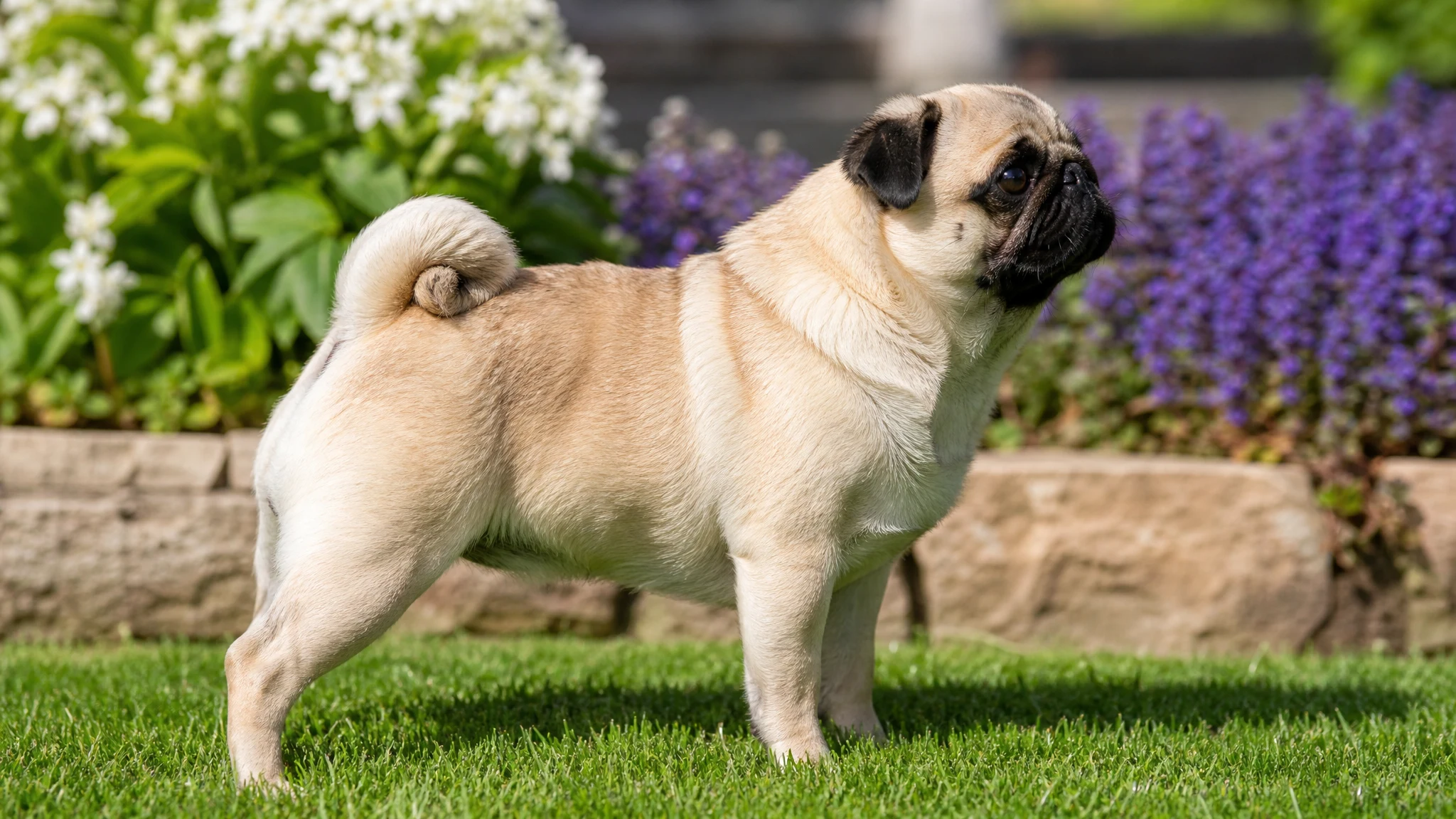
General nutrition information compiled from product labels and published sources, not veterinary advice. Your veterinarian is the right person to choose a diet for your dog, especially one with a health condition.
An itchy, red or smelly Pug is stressful to live with. Food is one of several possible causes, and it is not always the cause. Sorting that out takes patience and a veterinarian.
This guide covers the part you can do at home. You will record what your Pug eats, read labels carefully, and run a structured food plan that your veterinarian sets up. It does not promise that any food will fix pug skin allergies, and it does not replace an exam.
Before You Start: What Diet Can and Cannot Do
Itchy skin has many causes. Fleas, environmental triggers, skin infections and food reactions can look alike. Only a veterinarian can tell them apart, and some need medical treatment that food will not replace.
No food on this page prevents, treats or cures any skin condition. A diet can be one part of a plan your veterinarian builds for your individual dog.
Pug-specific health facts are limited here. The Orvis Pug breed page, a secondary source, lists obesity, hip dysplasia and an elongated palate among common Pug health issues. It also lists Legg-Perthes disease, patellar luxation and Pug Dog Encephalitis. Orvis does not tie those last three to diet, so do not link them to food choices. For skin-specific questions about your Pug, ask your veterinarian.
Materials You Will Need
- A notebook or phone notes for a daily food and symptom diary
- The ingredient panel and AAFCO statement from every food, treat and chew your Pug gets
- A kitchen scale or a standard measuring cup, so portions stay consistent
- Your veterinarian's contact details and a list of questions
- Photos of the itchy areas, taken weekly in the same light
Step 1: See Your Veterinarian First
Book an exam before changing anything. Your veterinarian can check for parasites, infection and other causes. They can also say whether a food trial makes sense for your Pug.
If they recommend a special diet, follow their plan. Prescription diets are something only a veterinarian prescribes, so do not pick one on your own.
Step 2: Write Down Everything Your Pug Eats
List the main food, treats, dental chews, table scraps, flavored medications and any supplements. Pugs are good at getting extra snacks from family members, so ask everyone in the house.
Add the brand, product name and the date you started it. This list is the most useful thing you can hand your veterinarian.
Step 3: Learn to Read the Label
Three parts of a label matter most for this job.
- The AAFCO statement. It says whether the food is complete and balanced, and for which life stage. Some statements say the food was substantiated by animal feeding tests. Others say it was formulated to meet the nutrient profiles.
- The ingredient list. Ingredients appear by weight, with the heaviest first. Look at the first five, but check the whole list.
- The guaranteed analysis. It gives minimum protein and fat and maximum fiber. These are not exact amounts.
Treat marketing words with some skepticism. "Natural," "premium" and "grain-free" do not tell you whether a food suits a dog with itchy skin.
Step 4: Compare Foods by Label Data
The table below compares the first listed ingredients of several foods, using each brand's own product page. We compared label data only. We did not run feeding trials or taste tests, and we are not ranking these foods or recommending one for itchy skin.
| Food | First ingredients listed | Calories listed |
|---|---|---|
| Royal Canin Pug Adult | Brewers rice, brown rice, oat groats, chicken by-product meal, corn | 315 kcal ME per cup |
| Hill's Science Diet Adult Perfect Weight Small & Mini | Chicken, cracked pearled barley, brown rice, pea fiber, corn protein meal | 298 kcal per cup |
| VICTOR Hi-Pro Plus Small Breed Adult | Beef, chicken meal, beef meal, brown rice, whole grain millet | 360 kcal per cup |
| Freshpet Small Dog Bite Size Chicken | Chicken, chicken liver, carrots, cranberries, eggs | 267 kcal per cup |
Two things stand out. Chicken or a chicken product appears in the first five ingredients of most of these foods. A dog whose veterinarian wants chicken avoided would need a different option, so check each brand's full ingredient list.
The calorie range is also wide, from 267 to 360 per cup. A cup of one food is not a cup of another, which matters for Step 6.
Step 5: Run a Food Trial Only With Your Veterinarian
When a food reaction is suspected, veterinarians often use a limited-ingredient trial. The dog eats a carefully chosen food, and nothing else, for a period your veterinarian sets. The goal is to see whether the skin changes.
The details matter, so ask your veterinarian:
- Which food should I use, and why?
- How long should the trial last?
- What do I do about treats, chews and flavored medications?
- What signs mean I should call you sooner?
Switch foods gradually unless your veterinarian says otherwise. A sudden change can upset a Pug's stomach and muddy your notes.
Step 6: Measure Portions and Watch the Waistline
Obesity is listed among common Pug health issues by the Orvis Pug breed page. A Texas A&M College of Veterinary Medicine press release (June 16, 2026) describes an ongoing clinical trial in short-muzzled dogs, including a Pug. It reported improvements in dogs that reached ideal weight, and the trial was still running at release. Those results are early, so they do not show that weight loss fixes breathing problems. They are one more reason to keep your Pug lean.
Orvis gives a typical adult Pug weight of 14 to 18 pounds, an average, not a target for your dog. Your veterinarian can judge your Pug's ideal weight.
Use the feeding guide on the label as a starting point only. For example, Royal Canin's adult Pug page lists 1 1/8 cups (92 g) per day for a 13 pound, low-activity dog. Your Pug may need more or less. Hill's and VICTOR both say to adjust amounts to keep good body condition.
For more on how weight, life stage and calories fit together, see our guide to the diet factors that matter for Pugs.
Step 7: Track Changes and Report Back
Each day, note itching, redness, ear trouble, paw licking and stool quality. Keep the weekly photos going. Bring the diary to every recheck.
Changes in skin can be slow, and many things can shift them. Your diary helps your veterinarian see a pattern instead of guessing.
Tips
- Change one thing at a time. If you change food, treats and shampoo in the same week, you will not know what mattered.
- Check every treat label. A "healthy" treat can undo a careful trial.
- Keep the household on the same plan, including children and visitors.
- Choose a food with an AAFCO statement that matches your dog's life stage.
- Ask the brand directly if a label does not say something you need to know, such as kibble size. Many product pages here do not give kibble dimensions.
Common Mistakes to Avoid
- Assuming grain is the problem. A grain-free label does not make a food safer for itchy skin. Freshpet's Small Dog Bite Size Chicken, for example, is grain-free but lists chicken first.
- Adding supplements on your own. Ask your veterinarian before giving any, and follow their directions on amounts.
- Switching foods every week. Constant changes make results impossible to read.
- Skipping the exam. Skin infections and parasites need treatment that food cannot provide.
- Feeding by the cup without checking calories. Because calories per cup vary, a swap can add weight quickly.
- Treating the FDA DCM story as settled either way. The FDA's DCM investigation page was last updated December 23, 2022. The FDA said it would not release further public updates until there is meaningful new scientific information. Talk with your veterinarian about heart health and diet choices instead of relying on headlines.
What Results to Expect
Some Pugs show less itching once an underlying cause is found and managed. Others improve only partly, and some do not change with diet at all. Because skin problems have many causes, a diet change may help, may help a little, or may make no difference.
Please do not expect a quick fix. Judge progress by your diary and photos, and let your veterinarian decide when to continue, change or stop a plan.
If your Pug develops sudden swelling, trouble breathing, repeated vomiting or open sores, call your veterinarian right away.
Sources
- Orvis Pug breed page
- Texas A&M College of Veterinary Medicine press release, June 16, 2026
- FDA CVM: Investigation into Potential Link between Certain Diets and Canine Dilated Cardiomyopathy
- Royal Canin US: Pug Adult Dry Dog Food
- Hill's Pet US: Science Diet Adult Perfect Weight Small & Mini
- VICTOR: Hi-Pro Plus Small Breed Adult
- Freshpet: Small Dog Bite Size Chicken Recipe