Omega Fatty Acids and Pug Dry Skin: What the Label Should Show
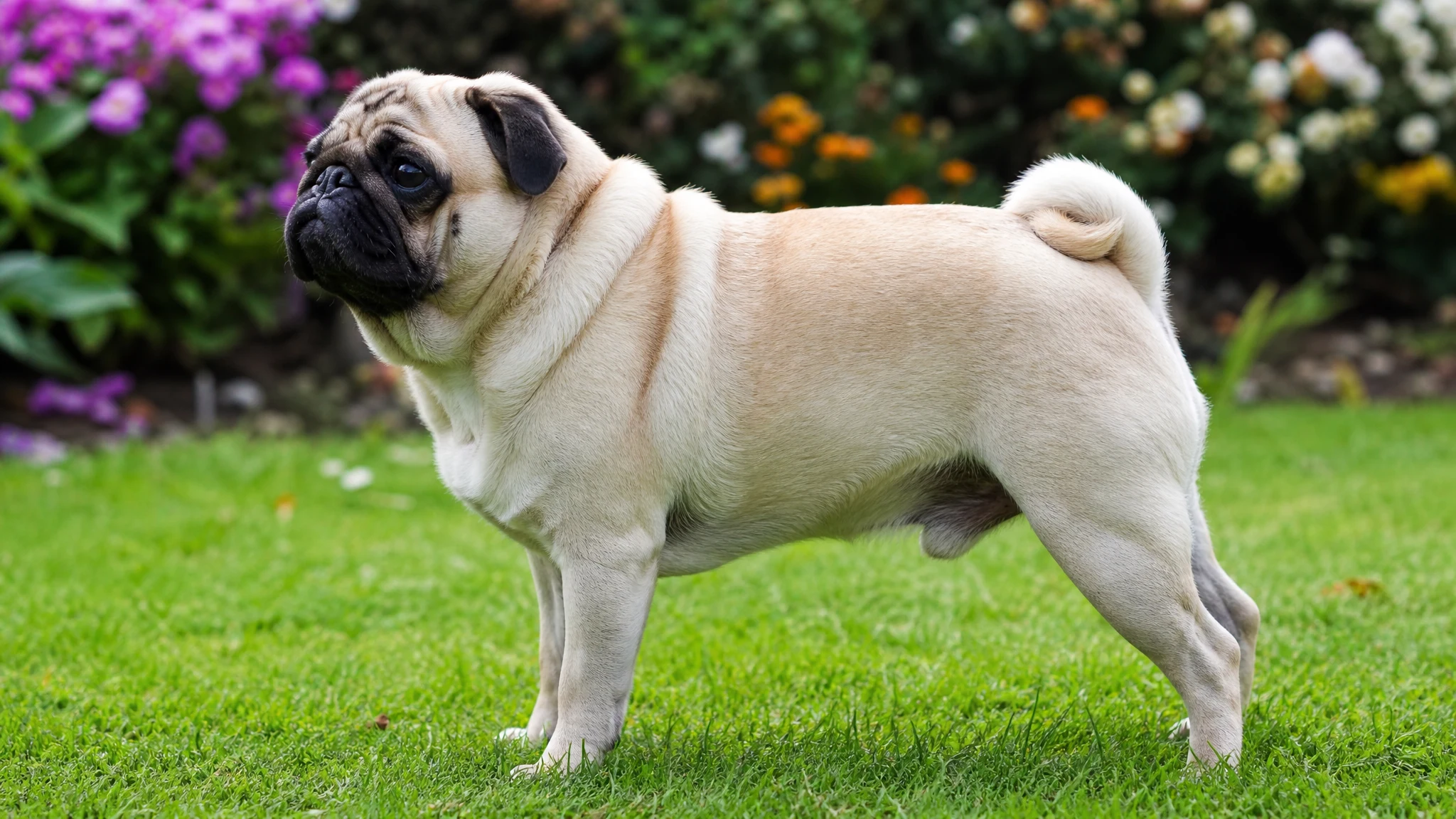
General nutrition information compiled from product labels and published sources, not veterinary advice. Your veterinarian is the right person to choose a diet for your dog, especially one with a health condition.
Flaky, dull or itchy skin is one of the first things many Pug owners notice, and omega fatty acids are one of the first things dog food ads mention. The two get linked fast. The label itself is more cautious than the ad.
This guide shows you how to read a dog food label with omega fatty acids in mind. It also covers what a label can and cannot tell you, and how to bring a clear question to your veterinarian. Pug dry skin has many possible causes, and food is only one of them.
What this guide can and cannot do
We compared label data published on brand product pages. We did not run feeding trials or taste tests, and we did not feed any of these foods to a dog. Nothing here says a food prevents, treats or cures a skin condition.
The product pages we looked at give an AAFCO statement, ingredient lists, a guaranteed analysis (crude protein, crude fat and fiber), calories and a feeding guide. For the foods we reviewed, none of those pages gave an omega-3 or omega-6 figure in the data we read. If you want that number, ask the brand directly. A label that does not show it has not told you it is low. It just has not told you.
For general Pug background, see our overview of the diet factors that matter for this breed.
Materials you need
- The bag, can or product page for your Pug's current food.
- Your Pug's recent weight, from a home scale or your vet's office.
- A short note on what you see: where the dryness is, how long it has lasted, and whether your Pug scratches, licks or chews the area.
- A list of everything your Pug eats, including treats, chews and table scraps.
- A phone or email contact for the brand's customer service line, which is usually on the package.
Step 1: Rule out the basics with your veterinarian
Before you change a diet, ask your veterinarian to look at the skin. Dry, flaky skin can come from parasites, infection, allergies, or other medical causes. A Pug's facial folds and tight skin creases also need regular care. None of that is solved by a label.
Your veterinarian decides whether food is part of the picture for your individual dog. If a prescription diet is ever recommended, that is something only a veterinarian prescribes.
Step 2: Find the AAFCO statement
Look for a line saying the food is formulated to meet the AAFCO Dog Food Nutrient Profiles, or that it passed AAFCO-procedure feeding tests, for your dog's life stage. This tells you the food is meant to be complete and balanced. It does not tell you how much omega fatty acid is in it.
The brands we looked at word this differently. Royal Canin's Pug Adult page says the food is formulated to meet the AAFCO nutrient profiles for maintenance. Hill's Science Diet pages say AAFCO-procedure feeding tests substantiate the nutrition claim. Both are valid statements, but they are different methods. Match the statement to your Pug's life stage: puppy, adult or senior.
Step 3: Read the ingredient list for fat sources
Ingredients are listed in order. Fat and oil sources can show up as named items such as chicken fat, or as other oils further down the list. Here is what the first five ingredients look like on a few pages we read:
- Royal Canin Pug Puppy: chicken by-product meal, brewers rice, corn, chicken fat, wheat gluten.
- Hill's Science Diet Puppy Small & Mini Chicken & Brown Rice: chicken, whole grain oats, brown rice, chicken meal, chicken fat.
- Freshpet Small Dog Bite Size Chicken: chicken, chicken liver, carrots, cranberries, eggs.
Chicken fat is a fat source. That is all the list tells us. An ingredient name does not tell you the omega-3 or omega-6 amount, and only the first five are shown in the data we have. Other fat sources may appear later on the full list, so read the whole panel on your bag.
Step 4: Check the guaranteed analysis for crude fat
The guaranteed analysis lists a minimum crude fat percentage. It covers all fat in the food, not just omega fatty acids. Here are the figures from the product pages:
| Food | Crude fat (min) | Calories |
|---|---|---|
| Royal Canin Pug Adult (dry) | 14.0% | 315 kcal ME per cup |
| Royal Canin Pug Puppy (dry) | 16.0% | 369 kcal ME per cup |
| VICTOR Hi-Pro Plus Small Breed Adult (dry) | 14.0% | 360 kcal per cup |
| Freshpet Small Dog Bite Size Chicken (fresh) | 12% | 267 kcal per cup |
The Hill's Science Diet pages we read list only average nutrient values on a dry matter basis, not a guaranteed minimum. For example, the Adult Perfect Weight Small & Mini page shows an average of 11.2% fat. Dry matter figures and as-fed figures are not directly comparable, so do not set them side by side.
A higher fat number is not a better skin food. Fat is also calorie dense, and that matters for a Pug.
Step 5: Weigh the calories against your Pug's weight
Orvis lists obesity among the common Pug health issues and gives an average adult weight of 14 to 18 pounds. A Texas A&M College of Veterinary Medicine press release from June 16, 2026 describes an ongoing clinical trial in short-muzzled dogs, including a Pug, where dogs reaching ideal weight showed improvements in breathing. The trial is still running, so treat it as early information.
Here is why this matters for a skin-focused food search. Many omega-rich foods and fish oil products add fat and calories. If you add them without cutting something else, your Pug may gain weight. Check the calories per cup on the label and use the feeding guide as a starting point, not a fixed rule. Hill's pages say to adjust amounts to maintain optimal weight and to ask your veterinarian if you are unsure.
Step 6: Ask the brand the question the label does not answer
Contact the brand and ask plainly. You could write:
- Does this food contain added omega-3 or omega-6 fatty acids, and where do they come from?
- Is there a published figure for each, and is it a guaranteed minimum or a typical value?
- Does that figure apply to the exact formula and life stage I am feeding?
Ask them to send the answer in writing. A clear answer is useful. A vague answer that leans on words like "skin and coat support" is a sign to keep asking.
Step 7: Take your notes to the vet before switching
Bring the label, your notes and your question about omega fatty acids to the visit. Ask whether a diet change makes sense for your Pug at all, and which kind. If a change is advised, ask how to switch gradually and what to watch for.
Do not add supplements on your own. Your veterinarian is the right person to say whether an extra is needed and how much, because the amount depends on the whole diet.
Tips
- Compare foods for the same life stage. A puppy food and a senior food are built for different needs.
- Change one thing at a time. If you change food, treats and grooming products together, you will not know what made a difference.
- Photograph the skin once a week in the same light. It is easier to judge change from photos than from memory.
- Keep treats small and count them toward the daily calories.
- Look at the brand's own product page for the current label, since formulas can change.
Common mistakes to avoid
- Treating one ingredient as proof. Seeing chicken fat or any oil on the list does not tell you the omega amount.
- Assuming grain free means better skin. We found nothing in the label data we read that links grain free status to skin. Freshpet's page lists its recipe as grain free and Royal Canin's Pug formulas as not grain free, and neither page makes that claim. The FDA's page on its investigation into diets and canine dilated cardiomyopathy (DCM) shows its latest update is dated December 23, 2022. It says no further public updates will come until there is meaningful new scientific information. If grain choices worry you, raise them with your veterinarian.
- Adding oil on top of a full bowl. It adds calories fast for a small dog.
- Skipping the vet because the problem looks minor. Dry skin that persists, or comes with redness, odor or scratching, needs an exam.
- Expecting a quick fix. Skin changes take time to judge, and a food may make no visible difference.
What results to expect
Results vary from dog to dog. Some owners see a change in coat or skin after a diet adjustment, and others see none, especially when the cause is not dietary. No label can promise a result, and we cannot say a given food will improve pug dry skin.
A realistic goal is a better-informed choice: a food that fits your Pug's life stage and weight, with label questions answered by the brand and a plan agreed with your vet. Give any change several weeks before judging it, and keep your vet in the loop if the skin gets worse.
Sources
- Orvis Pug breed page (weight range and listed health issues)
- Texas A&M College of Veterinary Medicine press release, June 16, 2026
- FDA CVM: Investigation into Potential Link between Certain Diets and Canine Dilated Cardiomyopathy
- Royal Canin US: Pug Adult Dry Dog Food
- Royal Canin US: Pug Puppy Dry Dog Food
- Hill's Pet: Science Diet Puppy Small & Mini
- Hill's Pet: Science Diet Adult Perfect Weight Small & Mini
- VICTOR: Hi-Pro Plus Small Breed Adult
- Freshpet: Small Dog Bite Size Chicken Recipe