Pug Weight Loss: A Diet-Based Approach
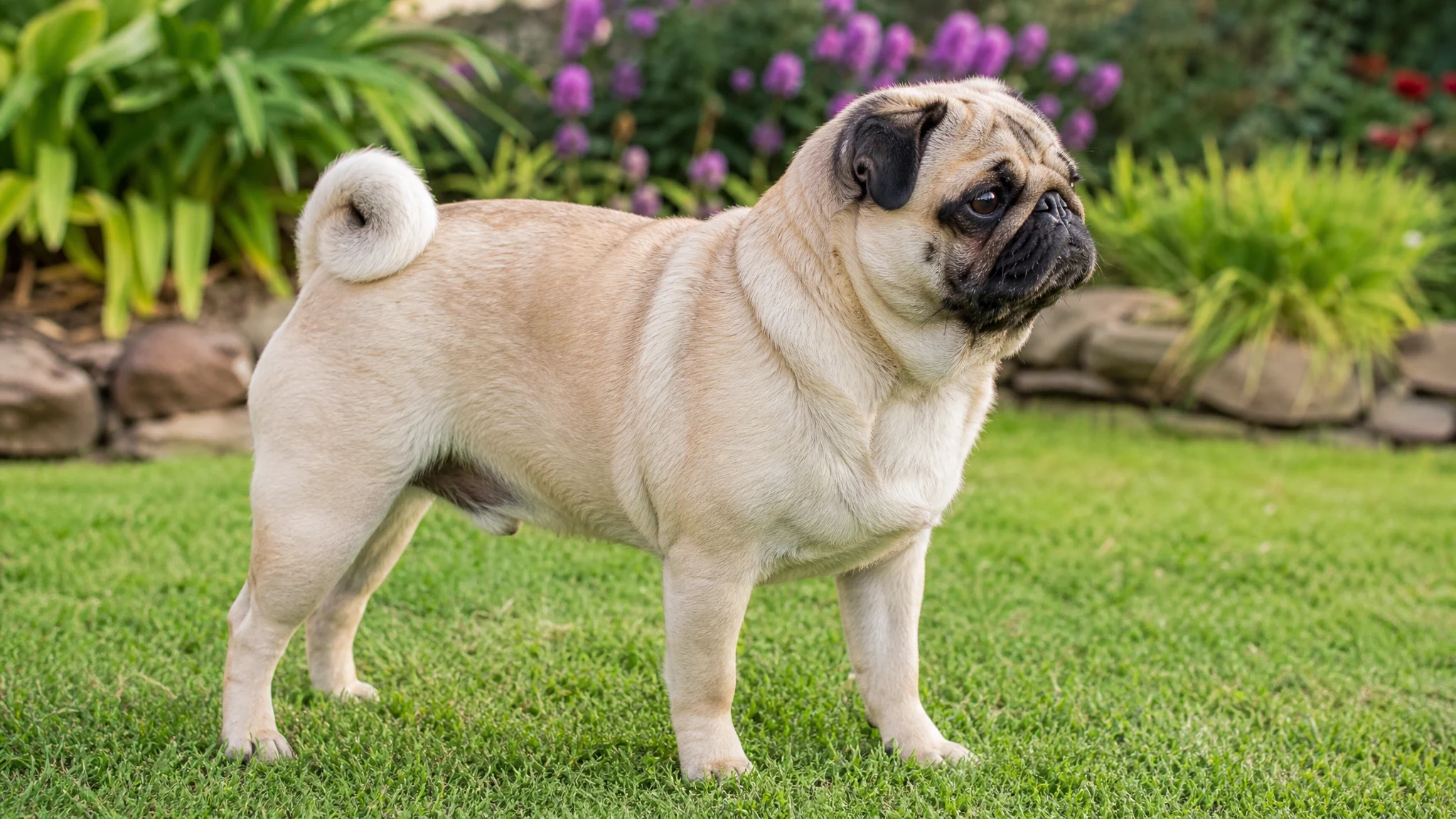
General nutrition information compiled from product labels and published sources, not veterinary advice. Your veterinarian is the right person to choose a diet for your dog, especially one with a health condition.
Pugs are small, sturdy and very good at asking for food. Orvis lists obesity among the common health issues of the breed, so extra pounds are a real concern for many owners.
This guide walks through a diet-based plan for Pug weight loss, one step at a time. It covers what to gather, how to read a label, how to measure food, and what mistakes to avoid. It is general information. A veterinarian decides what is right for an individual dog.
Why weight matters for this breed
Orvis gives the average adult Pug weight as 14 to 18 pounds and the typical life expectancy as 13 to 15 years. Those are averages, not targets for your dog. Frame, age and build vary, so your veterinarian should set the goal weight.
Texas A&M College of Veterinary Medicine announced a clinical trial on June 16, 2026. It involves short-muzzled dogs, including a Pug. The release says dogs that reached an ideal weight showed improvements, and that the trial was still ongoing. That is early information, not proof. It does not mean weight loss will fix breathing trouble in any one dog. Orvis also lists an elongated palate as a Pug health concern, which is another reason to involve your veterinarian.
For a wider look at what shapes a Pug's bowl, see our guide to Pug nutrition and the diet factors that matter for this breed.
What you will need
- A kitchen scale that reads in grams or ounces. Cups vary in how much kibble they hold, so weighing is more consistent.
- A measuring cup, for days when you do not use the scale.
- The bag or can of your dog's current food, with its calorie statement and feeding guide.
- A notebook or phone note for weights, portions and treats.
- A pet scale or your veterinarian's scale for regular weigh-ins.
- An appointment with your veterinarian before you change anything.
Step-by-step plan
Step 1: Start with your veterinarian
Ask for a body condition score, a goal weight and a daily calorie target. Mention any breathing, joint or digestive concerns. Weight loss that is too fast can be a problem, so ask what pace is reasonable for your dog.
If your veterinarian recommends a prescription diet, that is a decision only a veterinarian can make. This article does not cover those foods.
Step 2: Record what your dog eats now
For one week, write down everything: meals, treats, chews, table scraps and food used for pills. Many owners find the total is higher than they thought, and the extras are often the easiest place to cut.
Step 3: Find the calories on the label
Look for "kcal per cup" or "kcal per kg" on the packaging or the brand's product page. Foods differ a lot. Here are label figures from brand pages for a few small-breed dry foods:
| Food (brand page) | Calories listed | Other label data |
|---|---|---|
| Hill's Science Diet Adult Perfect Weight Small & Mini Chicken & Brown Rice | 298 kcal per cup | Average crude fiber 10.3% and fat 11.2%, dry matter basis |
| Royal Canin Pug Adult | 315 kcal ME per cup | Protein min 23%, fat min 14%, fiber max 3.4% |
| VICTOR Hi-Pro Plus Small Breed Adult | 360 kcal per cup | Protein min 30%, fat min 14%, fiber max 5% |
| Hill's Science Diet Puppy Small & Mini Chicken & Brown Rice | 418 kcal per cup | Puppy food, so a poor match for an adult Pug on a diet |
We compared label data only. We did not run feeding trials or taste tests, and a lower calorie count per cup does not make a food better for every dog. Also note that Hill's lists averages on a dry matter basis, while Royal Canin and VICTOR list guaranteed minimums and maximums, so those percentages are not directly comparable.
Step 4: Decide whether to keep or change the food
Often the first change is the amount, not the brand. If you and your veterinarian decide to switch, check these label points:
- An AAFCO statement that matches the life stage. An adult Pug on a diet needs a maintenance or all life stages statement, not a puppy-only food.
- Calories per cup or per can, so you can match the veterinarian's target.
- The first ingredients. Hill's Perfect Weight lists chicken, cracked pearled barley and brown rice first. Royal Canin Pug Adult lists brewers rice, brown rice and oat groats first. An ingredient list shows order, not quality.
- Fiber. Higher fiber can mean a lower calorie food, but it is only one piece of the label.
You can read full label details on the brand pages for Royal Canin Pug Adult and Hill's Science Diet Adult Perfect Weight Small & Mini. Brands can change formulas, so confirm current data on the brand page or the bag.
No food prevents, treats or cures a health condition on its own. Diet is one part of a plan your veterinarian oversees.
Step 5: Measure every meal
Use the feeding guide as a starting point, not a rule. For example, the Royal Canin Pug Adult page lists 1 1/8 cups (92 g) per day for a 13 lb, low-activity dog. The Hill's pages tell owners to adjust amounts to maintain optimal weight and to ask a veterinarian if unsure.
If your veterinarian gives a calorie target, divide the target by the food's calories per cup to get a cup amount, or ask the clinic to do the math. Then weigh each portion. Split the day's food into two or more meals.
Step 6: Count treats and extras
Treats add calories without being on the feeding guide. Ask your veterinarian how much of the daily allowance treats can take up, then subtract that from meals. Small pieces of the dog's own kibble can work as rewards for training. Plain, safe vegetables may be an option, but check with your veterinarian first.
Step 7: Change foods slowly, if you change them
If you switch foods, mix the new food into the old over about a week, increasing the share each day. Watch stools and appetite. Ask your veterinarian if anything looks off.
Step 8: Weigh and adjust
Weigh your Pug every two weeks or on the schedule your clinic suggests. Use the same scale each time. Log the number and the daily portion. If the weight does not move after several weeks, or drops faster than your veterinarian advised, call the clinic rather than guessing.
Tips that help
- Make everyone in the household follow one feeding plan, and keep a single person in charge of the scoop.
- Use a slow feeder or a puzzle bowl to stretch mealtime. Choose a shallow design, since Pugs have short muzzles.
- Replace some food rewards with play, a short walk or praise. Keep walks gentle and avoid heat, since flat-faced dogs can struggle to breathe in hot weather. Ask your veterinarian about safe exercise.
- Take a photo from above and from the side each month. Changes in shape are easier to see than on a scale.
- Look at the percentages in context. A fresh food such as Freshpet Small Dog Bite Size Chicken lists 267 kcal per cup, but the brand page says to select your dog's weight for the daily amount. Cups of different foods are not interchangeable.
Common mistakes to avoid
- Using the cup that came with an old scoop. Scoops vary widely. Weigh the food.
- Cutting food too hard. Sharp cuts can leave a dog hungry and short of nutrients. Follow your veterinarian's plan.
- Feeding a puppy formula to an adult. Puppy foods are often more calorie dense. The Hill's puppy recipe above lists 418 kcal per cup versus 298 for the Perfect Weight recipe.
- Forgetting the extras. Dental chews, pill pockets and licks from your plate all count.
- Adding supplements on your own. Ask your veterinarian before giving any, and follow only their instructions.
- Chasing a grain-free label. The FDA has been investigating a possible link between certain diets and canine dilated cardiomyopathy. Its page was last updated December 23, 2022, and the FDA said it would not post more public updates without meaningful new scientific information. Ask your veterinarian about the diet you are considering.
- Using weight loss as a quick fix. Slow, steady change is usually easier to keep.
What results to expect
Results vary. Many dogs lose weight gradually when portions are measured and treats are limited, but no plan can promise a particular number or timeline. You may notice more energy, easier movement or a more defined waist over time, though not every dog will.
If your Pug has noisy breathing, snoring or exercise intolerance, being closer to an ideal weight may help some dogs, but the Texas A&M trial is still ongoing and the results are early. Weight is just one factor, and breathing problems need a veterinarian's evaluation either way.
Once your dog reaches the goal weight, your veterinarian will help you set a maintenance amount. Keep weighing food and keep checking body condition.
When to call your veterinarian
Reach out if your Pug refuses food, vomits, has loose stools after a change, becomes lethargic, or has labored breathing. Do not wait for the next weigh-in.
Sources
- Orvis Pug breed page
- Texas A&M College of Veterinary Medicine press release, June 16, 2026
- FDA Center for Veterinary Medicine: Investigation into Potential Link between Certain Diets and Canine Dilated Cardiomyopathy
- Royal Canin US: Pug Adult Dry Dog Food
- Hill's Pet: Science Diet Adult Perfect Weight Small & Mini
- Hill's Pet: Science Diet Puppy Small & Mini
- VICTOR: Hi-Pro Plus Small Breed Adult
- Freshpet: Small Dog Bite Size Chicken Recipe