What to Feed a Pug With Diarrhea: A Vet-Guided Approach
General nutrition information compiled from product labels and published sources, not veterinary advice. Your veterinarian is the right person to choose a diet for your dog, especially one with a health condition.
Loose stool in a small, flat-faced dog is worrying. Most owners want to know what to put in the bowl, and what to take out of it.
Here, "vet-guided" means the plan starts and ends with your own veterinarian's instructions. This page cannot diagnose your dog or tell you what to feed. It gives you a calm way to prepare, to report what you see, and to follow your vet's plan once you have one. Pug diarrhea has many possible causes, and the cause decides the right food.
Before you start: know your dog's baseline
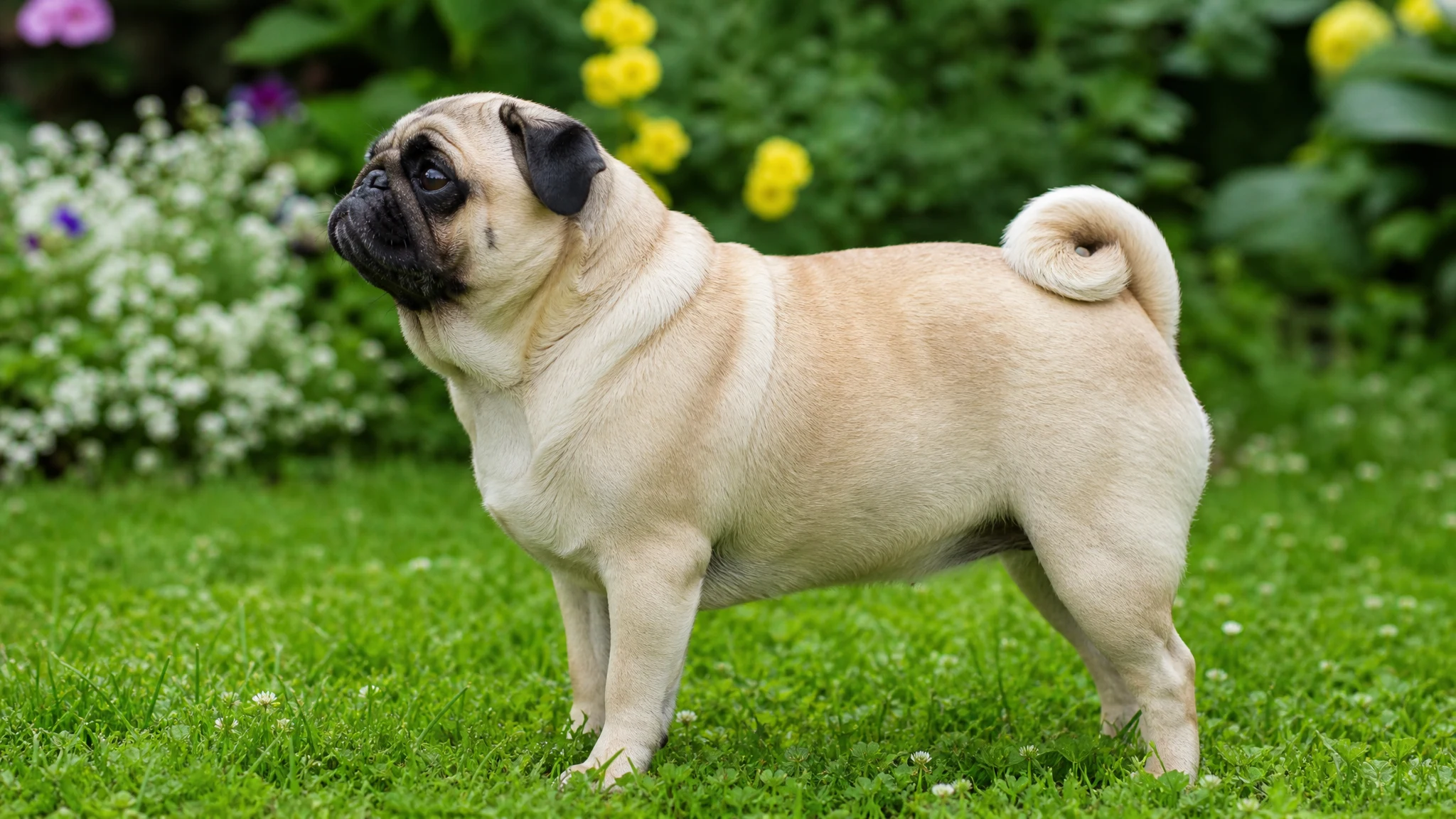
The Orvis Pug breed page lists an average adult weight of 14 to 18 pounds. That is a small body, so a few days of poor intake or fluid loss matters more than it would in a large dog. Weigh your dog if you can. Your vet will ask for a current weight.
The same Orvis page lists obesity among common Pug health issues. This is worth remembering later, when you return to normal feeding. Our guide to Pug nutrition and the diet factors that matter for this breed covers the bigger picture.
Materials you need
- Your veterinarian's phone number, or the number of an emergency clinic
- A notebook or phone note for a stool and feeding log
- A kitchen scale or a standard measuring cup
- The bag or can of your Pug's current food, with the full label
- A list of everything your dog ate in the last few days, including treats, table scraps and chews
- Fresh water in a clean bowl
- A photo of the stool, if you can take one, for your vet
Step-by-step: what to do
1. Check for warning signs first
Call your veterinarian promptly, and do not wait it out, if you see any of these:
- Blood in the stool, or black, tarry stool
- Repeated vomiting
- Unusual tiredness, weakness or a swollen belly
- Refusing water
- Diarrhea in a young puppy or a senior dog
- Labored or noisy breathing beyond your Pug's usual snorting
Pugs are a short-muzzled (brachycephalic) breed. The Orvis page lists an elongated palate among their health concerns. Vomiting can be more worrying in a dog with airway trouble, so tell your vet about the breed when you call.
2. Write down what you see
Note when the diarrhea started, how often it happens, and what it looks like. Add any changes in appetite, energy or thirst. Include recent changes in food, new treats, or anything your dog might have gotten into. This log is the most useful thing you can hand your vet.
3. Keep water available
Offer fresh water at all times. Do not force large amounts. If your Pug will not drink, or drinks and vomits it, that is a reason to call your vet.
4. Ask your vet what to feed, and for how long
This is the key step. Your veterinarian may suggest a short period of reduced food, a bland home-cooked meal, or a veterinary diet. They may also want a stool sample first. Ask these questions:
- Should I change food now, or stay on the current one?
- How much, and how many meals a day?
- How long before I return to the regular food?
- Which signs mean I should call you back?
If your vet recommends a prescription or therapeutic diet, that is a veterinarian's decision. Do not pick one up on your own.
5. Measure portions carefully
Small dogs are easy to overfeed by accident. Use the scale or measuring cup, not a scoop that is "about right." If your vet has not given an amount, brand feeding guides are only starting points. For example, the Royal Canin Pug Adult page lists 1 1/8 cups (92 g) per day for a 13 lb dog with low activity. Hill's says to adjust amounts to maintain optimal weight and to ask your veterinarian if you are unsure. During a stomach upset, your vet's amount overrides any bag.
6. Feed small, plain, consistent meals
If your vet approves feeding, smaller and more frequent meals are a common approach. Keep the menu boring and the same each time. Do not add new treats, chews, toppings, dental sticks or human food unless your vet says so.
7. Return to the regular diet slowly
When stools improve and your vet agrees, move back toward the normal food in stages. Mix a little of the regular food into the temporary food, then increase the share over several days. Your vet can tell you the pace that suits your dog. Fast switches are a common cause of loose stool on their own.
What about changing to a new food?
Do not switch brands in the middle of a stomach upset unless your vet advises it. A new formula adds a second variable, and it makes the cause harder to find.
If you and your vet later decide a different diet makes sense, compare labels calmly. We compared label data from brand pages. We did not run feeding trials or taste tests. Here are a few label facts as published by the brands:
| Food (brand page) | Form | Calories per label | First ingredients per label |
|---|---|---|---|
| Royal Canin Pug Adult | Dry | 315 kcal ME per cup | Brewers rice, brown rice, oat groats, chicken by-product meal, corn |
| Hill's Science Diet Adult Perfect Weight Small & Mini Chicken & Brown Rice | Dry | 298 kcal per cup | Chicken, cracked pearled barley, brown rice, pea fiber, corn protein meal |
| VICTOR Hi-Pro Plus Small Breed Adult | Dry | 360 kcal per cup | Beef, chicken meal, beef meal, brown rice, whole grain millet |
These are label facts only. A label cannot tell you whether a food will suit a dog with a sensitive gut. Each brand states an AAFCO nutritional adequacy statement for its food. That statement tells you a food is complete and balanced for a life stage. It does not say the food is gentle or suitable for a dog with diarrhea. You can read each label on the Royal Canin Pug Adult page, the Hill's Science Diet Perfect Weight page and the VICTOR Hi-Pro Plus Small Breed Adult page.
Tips
- Keep a steady routine. Same bowl, same times, same measured amounts.
- Take the label to the vet. Ingredients, the AAFCO statement and calories help your vet judge the diet.
- Count treats. Treats are part of the daily calories, and Pugs gain weight easily.
- Track body condition after recovery. Because obesity is listed among Pug health issues, return to a measured, label-guided portion once your dog is well.
- Wash hands and bowls. Clean up stool promptly and wash up well.
Common mistakes to avoid
- Giving human medicine. Never give anti-diarrhea or pain medicine made for people unless your vet directs it. Some are unsafe for dogs.
- Adding supplements on a guess. Ask your vet before giving any probiotic or supplement, and follow their directions on the product.
- Offering fatty or rich food. Table scraps, greasy leftovers and new chews can add to the problem.
- Starving a small dog for too long. Do not fast your Pug on your own. Ask your vet whether any food break is right, and for how long.
- Switching foods repeatedly. Frequent changes can keep the stomach unsettled and hide the real cause.
- Waiting too long. If it lasts beyond what your vet considers reasonable, or your dog seems worse, call.
- Trusting a grain-free or boutique label as a fix. The FDA's page on its investigation into diets and canine dilated cardiomyopathy (DCM) was last updated December 23, 2022. The agency said it would not release further public updates until there is meaningful new scientific information. Ask your vet about any diet choice rather than relying on a marketing claim.
What results to expect
Many cases of mild, short-lived loose stool settle within a few days with rest, steady care and a diet your vet approves. That is not guaranteed. Stools may take a little longer than the dog's energy and appetite to return to normal. Improvement may be gradual rather than sudden.
If stools stay loose, come back after you return to the regular diet, or other signs appear, that points toward a cause that food alone may not address. Your vet may suggest tests. Bring your log.
A related note on weight: a June 16, 2026 Texas A&M College of Veterinary Medicine press release describes an ongoing clinical trial in short-muzzled dogs, including a Pug. Dogs that reached an ideal weight showed improvements in breathing. The trial is still ongoing, so it does not prove anything about any food. It is one more reason to keep portions measured once your dog recovers.
The short version
- Check for warning signs and call your vet if any appear.
- Log what you see.
- Keep fresh water available.
- Ask your vet exactly what to feed and for how long.
- Measure portions.
- Keep meals plain and consistent.
- Reintroduce the regular diet gradually.
Pug diarrhea is common enough to be familiar, but your dog's small size and breed traits are good reasons to involve your veterinarian early.
Sources
- Orvis Pug breed page
- Texas A&M College of Veterinary Medicine press release, June 16, 2026
- FDA CVM: Investigation into Potential Link between Certain Diets and Canine Dilated Cardiomyopathy
- Royal Canin US: Pug Adult Dry Dog Food
- Hill's Pet US: Science Diet Adult Perfect Weight Small & Mini
- VICTOR: Hi-Pro Plus Small Breed Adult